

Paris Men’s Fashion Week 2026 unfolded like a series of quiet confrontations. Not with the system, but with the self. Designers resisted the urge to impress, choosing to pause, to withhold, to rework familiar codes through subtle disruption.
Across collections, a shared refusal to conform emerged, shaping a fashion week defined by tension – between tradition and experiment, structure and softness, comfort and risk.
DIOR: THE ROAD LESS TRAVELLED
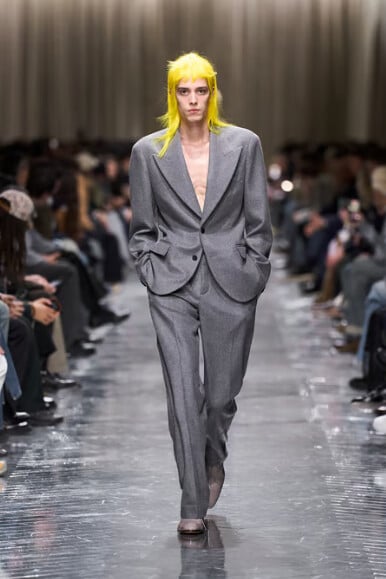
Image Courtesy: Dior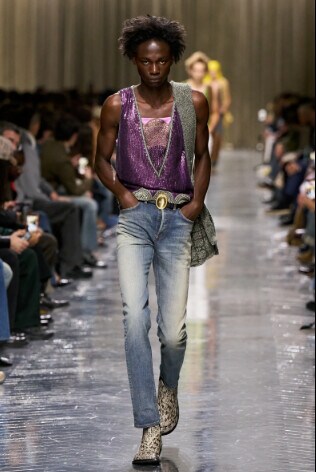
Image Courtesy: Dior
Jonathan Anderson’s second menswear collection for Dior was shaped around the theme, ‘Punk meets Poiret’ – a dialogue between historical opulence and modern, British-inflected grit. Rather than leaning into obvious rebellion, Anderson allowed a sense of friction to run quietly through the clothes, subtly unsettling the house’s polished codes. Yellow wigs, flashes of sequins and razor-slim jeans introduced a raw energy that felt instinctive rather than performative.
Silhouettes moved between restraint and exaggeration. Close-cut trousers favoured discipline while oversized, padded coats expanded into dramatic, cape-like forms that distorted proportion. The contrast created a wardrobe that never fully settled into balance, constantly shifting between control and excess.
Details added to this tension further – tasselled epaulettes, ruff-inspired collars and Donegal tweeds were a nod to aristocratic nostalgia, while waistcoat-like layers spoke to modern sensibilities.
What emerged was a juxtaposed collection, unwilling to be defined by a single element, merging punk’s edge with Anderson’s refined signature.
KARTIK RESEARCH: DEFYING THE ODDS
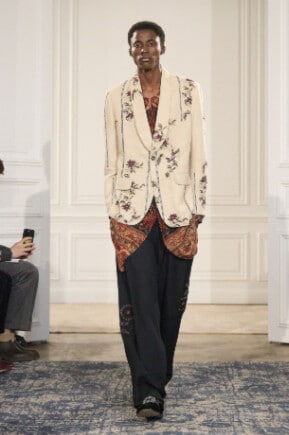
Image Courtesy: Kartik Research/ Instagram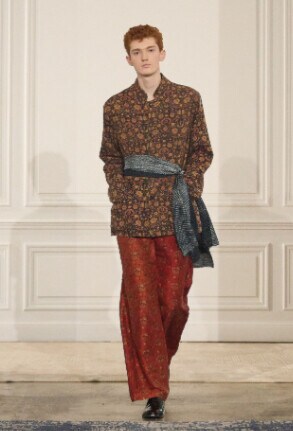
Image Courtesy: Kartik Research/ Instagram
Defiance underpinned Kartik Research’s collection, expressed not through grand gestures, but through a steady commitment to the act of making. Instead of resorting to explicit political cues, Kumra let the construction of the garments carry the message, foregrounding craft as the core of the story.
This quiet resistance ran throughout the collection, visible in thoughtfully composed looks: ochre-toned tunics worn with red trousers, gold-toned dresses offset by relaxed outer layers, and a mix of linen, cotton, and silk enriched with patchwork, hand embroidery, and gentle metallic detailing.
Even the more understated pieces felt deliberate and labour-intensive, reinforcing the idea that for him, artistry was not an afterthought, but the very foundation of the collection.
SAINT LAURENT: THE AESTHETICS OF CONTROL
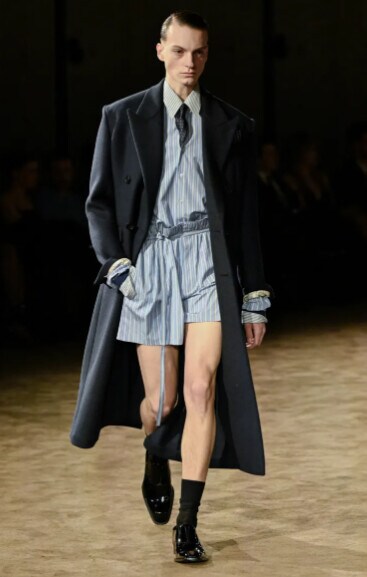
Image Courtesy: Saint Laurent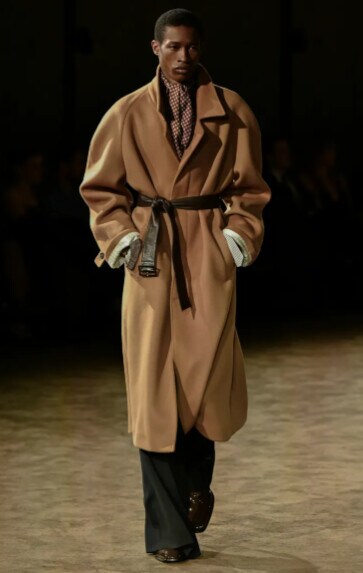
Image Courtesy: Saint Laurent
In Saint Laurent’s Winter 2026 Collection, Anthony Vaccarello’s emotional resistance was palpable. It was quite evident that the show leaned heavily into quiet tension – the kind that comes from holding oneself together, in silence.
Drawing from the 1956 novel Giovanni’s Room, the collection felt rooted in control – a mood shaped by intimacy tinged with distance, expressing desire that is as private as it is self-assured.
The clothes moved between softness and structure, suggesting a masculinity built on restraint rather than performance. Wrinkled fabrics, narrow cuts, and elongated lines hinted at vulnerability, while sharp shoulders and formal jackets imposed control. The collection became a case study of a life lived in stillness, but on one’s own terms.
AMIRI: DRESSED (NOT) TO IMPRESS
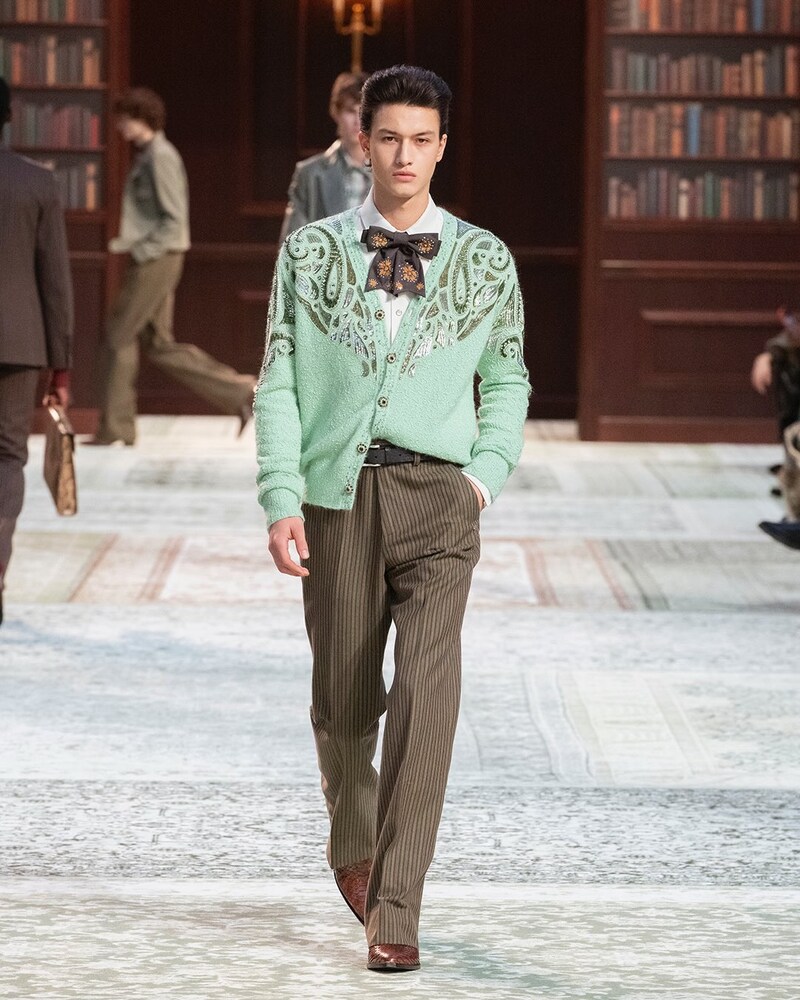
Image Courtesy: AMIRI/Instagram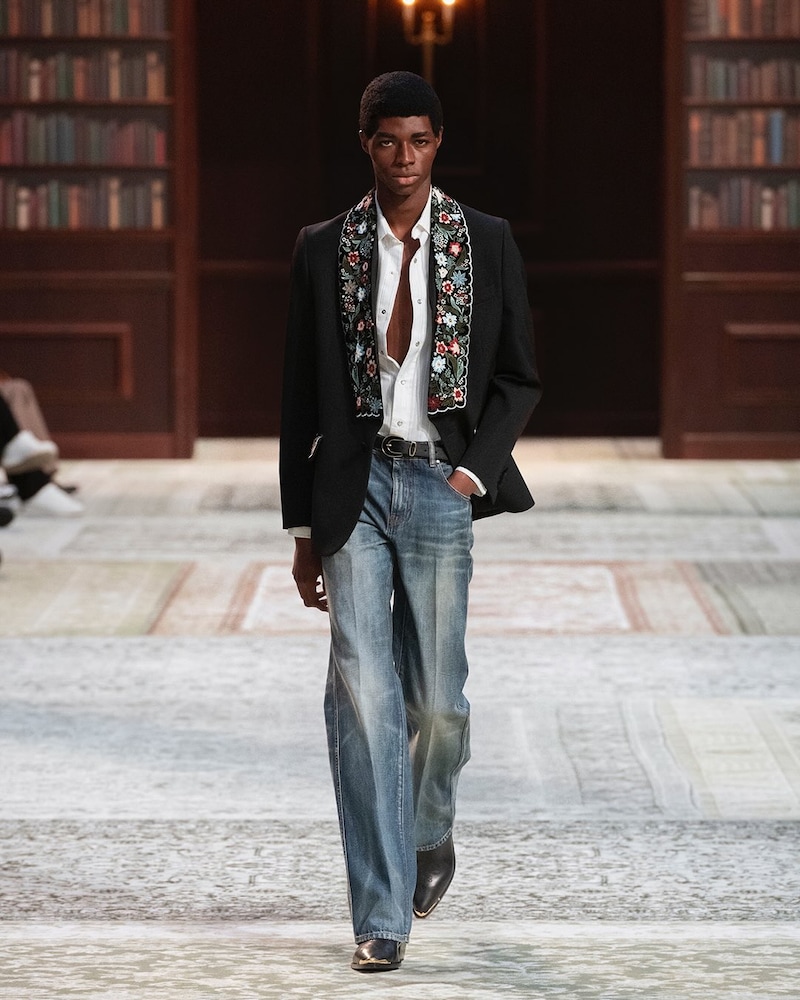
Image Courtesy: AMIRI/Instagram
In a season driven by spectacle, Mike Amiri chose a noticeably quieter route. His Fall 2026 collection resisted the usual Parisian urge to impress, favouring mood and familiarity over visual drama.
Drawing from 1970s Los Angeles counterculture, Amiri delivered a nostalgic wardrobe built on relaxed tailoring, soft leather, sheer layers, and premium denim. Western jackets and embroidered knits added texture, but rarely challenged the brand’s established aesthetic. The collection felt cohesive, if predictably so.
Colour and detail did most of the emotional work – merlot, sage, washed blues, velvet-flocked jeans, subtle embroidery. In a week obsessed with spectacle, Amiri’s choice stood out – he went for ease over excess, a move that suggested creative comfort at the expense of ambitious impact.
SACAI: STRUCTURAL REBELLION
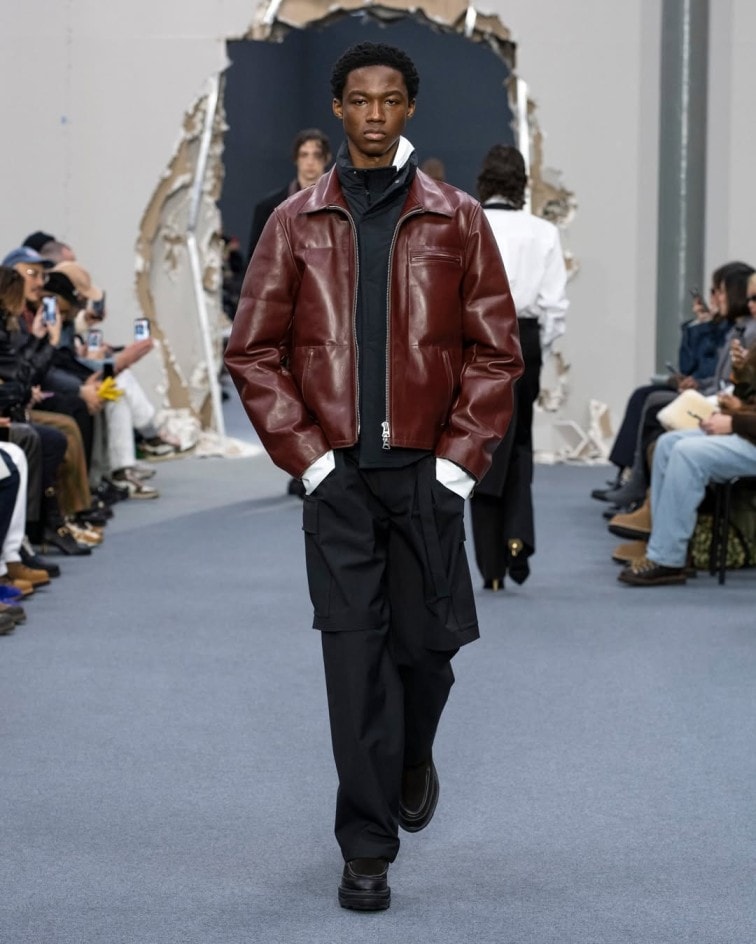
Image Courtesy: Sacai/Instagram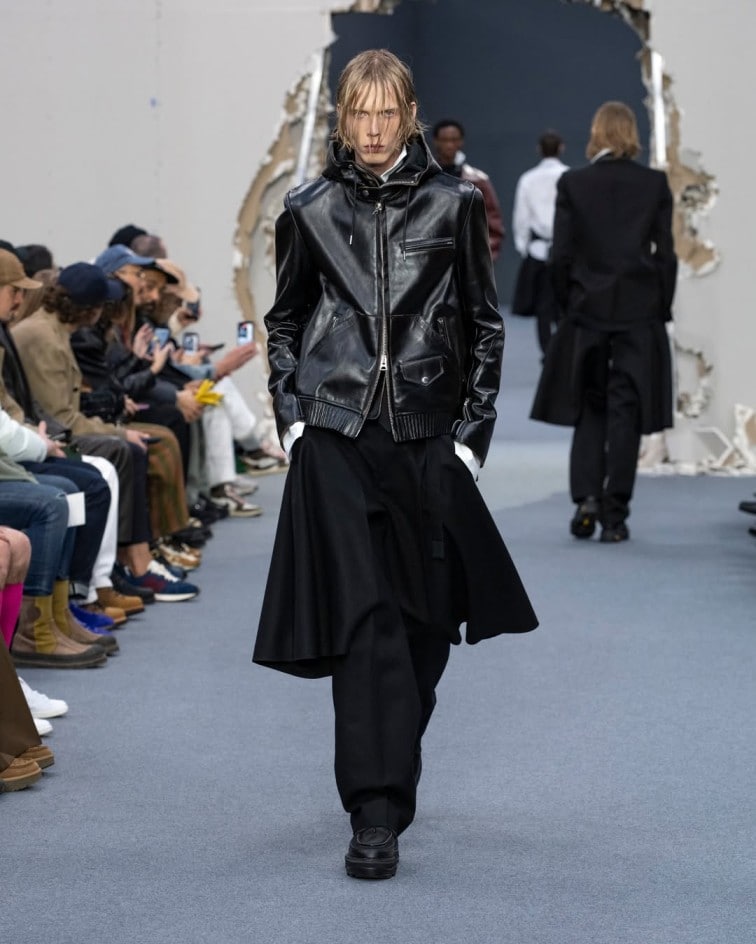
Image Courtesy: Sacai/Instagram
Trading the shallow waters for deeper dives, Chitose Abe continues to challenge fashion from the inside out. Sacai Fall Winter 2026 played with the visible and the hidden, embedding complexity within the garments themselves – through pattern-cutting, splicing, and the quiet manipulation of form.
Signature skirt–trouser hybrids embodied this philosophy. Wide-leg pants were cut to mimic wrapped skirts, creating asymmetry without obvious layering. Jackets appeared singular, but were structurally doubled, with panels attached to linings rather than shells. What looked clean and resolved on the surface was, underneath, the result of deliberate fragmentation.
Styling reinforced this controlled subversion. Scarf-like ties replaced knots, shirting emerged from unexpected seams, and colour was used sparingly – electric blue and bordeaux punctuating a grounded palette of olive, navy, black, and denim.
Sacai’s pieces did not let visual chaos get the better of them, for Abe dismantled garments not to shock, but to rebuild them more intelligently, proving that innovation does not need to announce itself to be heard.
NOTE-WORTHY WAVEMAKERS: AURALEE & FENG CHEN WANG
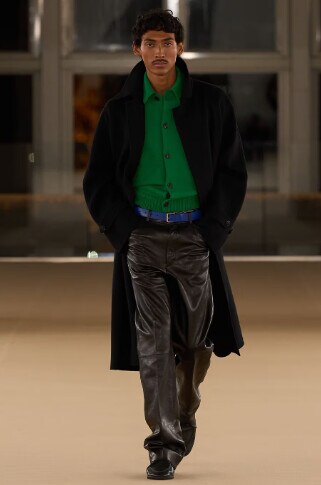
Image Courtesy: AURALEE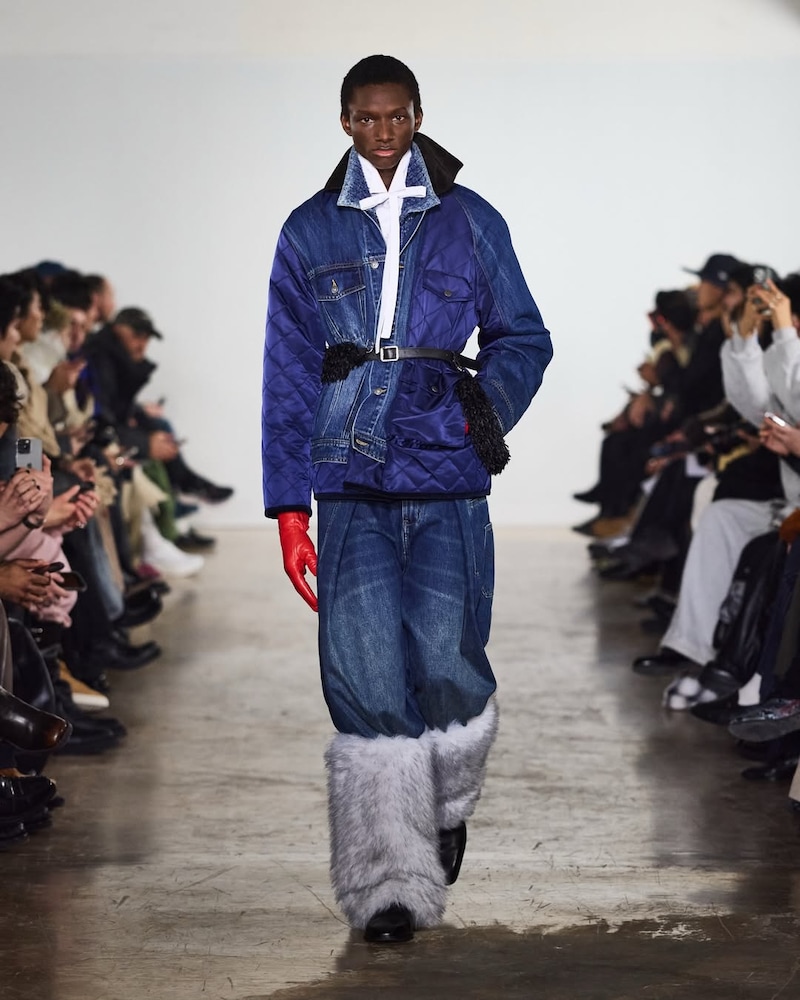
Image Courtesy: Feng Chen Wang/Instagram
Following the season’s broader turn toward restraint, Auralee, Ryota Iwai challenged the label’s own legacy of neutral minimalism by letting colour take the lead. Presented at the Musée de l’Homme, the Fall-Winter 2026 collection introduced royal blue, mint green, and vivid red across wool and leather – not as embellishment, but as a controlled shift in identity.
Elsewhere, defiance took on a more philosophical form. Feng Chen Wang approached resistance through contradiction, grounding her collection in the Chinese concept of Liang Yi – two forces in constant motion. Sharp tailoring clashed with distressed denim, dense leather met deconstructed nylon, and symbolic Dragon-Horse charms disrupted otherwise controlled silhouettes, effortlessly blurring the boundary between myth and reality.
This was a fashion week that did not rely on loud statements, because it did not need to. It understood the value of holding back, and the courage it takes to let go – and that made all the difference.


Understanding baccarat patterns is key, but platforms like jilbb club offer more than just games-they’re building entire ecosystems! Good resources for learning strategy are invaluable, too. It’s about informed fun!
7swevn